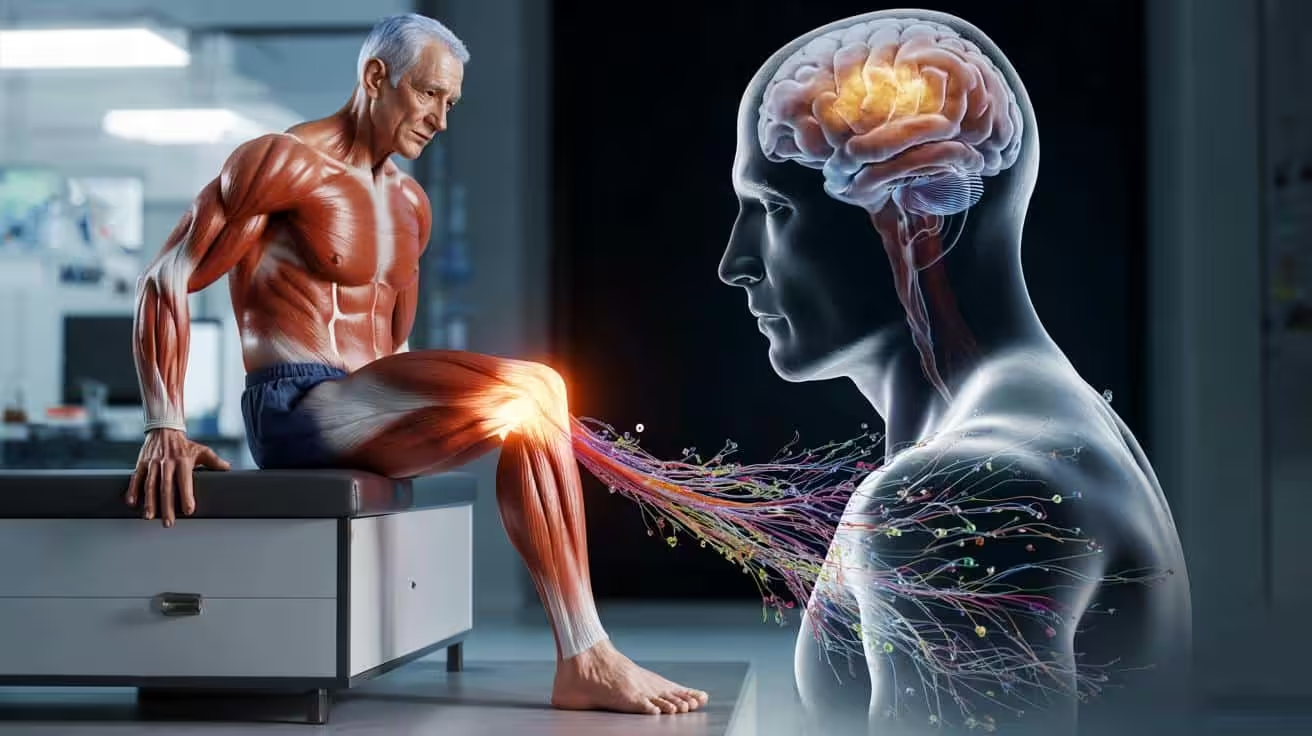
For decades, the search for a cure for Alzheimer’s disease has focused almost exclusively on the brain. But what if the key to unlocking this devastating condition lies not in the gray matter, but in the very muscles that power our movement and daily activities?
This radical idea is gaining traction among a growing number of researchers, who believe that the solution to Alzheimer’s may have been hiding in plain sight all along – in the intricate relationship between our muscles and our minds.
The implications of this shift in thinking could be profound, offering new hope to the millions of people worldwide living with Alzheimer’s and their loved ones.

Rethinking the Alzheimer’s Paradigm
For decades, the prevailing view has been that Alzheimer’s is a brain-based disease, caused by the accumulation of amyloid plaques and tangles of tau protein that disrupt neural function and lead to cognitive decline.
But a growing body of evidence suggests that the roots of Alzheimer’s may extend far beyond the brain, with the muscles playing a crucial, yet underexplored, role in the onset and progression of the disease.
This new line of research is challenging the traditional approach to Alzheimer’s treatment, which has largely focused on developing drugs that target the brain. By shifting the focus to the muscle-brain connection, scientists hope to uncover novel avenues for intervention and prevention.

The Muscle-Brain Link
The relationship between the muscles and the brain is more complex than previously thought. Emerging research indicates that the muscles are not merely passive components of the body, but active players in the maintenance and function of the central nervous system.
Through a complex network of signals and feedback loops, the muscles are constantly communicating with the brain, providing crucial information about movement, balance, and overall physical state. This bidirectional communication is believed to be essential for maintaining cognitive health and preventing the onset of neurodegenerative diseases like Alzheimer’s.
When this muscle-brain connection is disrupted, it may contribute to the development of Alzheimer’s and other forms of dementia. By understanding and targeting this connection, researchers hope to uncover new ways to preserve cognitive function and delay the progression of the disease.

Testing the Muscle-Brain Hypothesis
To explore the potential role of muscles in Alzheimer’s, researchers have been conducting experiments in animal models of the disease, with promising results.
In one study, scientists found that when they stimulated the muscles of mice with Alzheimer’s-like symptoms, they were able to see a significant improvement in cognitive function and a reduction in the hallmark brain pathologies associated with the disease.
These findings suggest that by targeting the muscles, it may be possible to bypass the classic Alzheimer’s targets in the brain and potentially slow or even reverse the course of the disease.

The Importance of Exercise
If the muscle-brain connection is indeed a key factor in Alzheimer’s, then the importance of physical activity and exercise takes on new significance. Regular exercise has long been touted as a way to maintain cognitive health and potentially reduce the risk of dementia, but the mechanisms behind this relationship have not been fully understood.
Now, with the growing recognition of the muscle-brain link, researchers believe that exercise may be a powerful tool for maintaining the health of this crucial communication system and potentially staving off the development of Alzheimer’s.
By keeping the muscles strong and active, individuals may be able to support the overall health of the brain and potentially slow the progression of cognitive decline.

Implications for Future Treatments
The shift in focus towards the muscle-brain connection in Alzheimer’s research could have far-reaching implications for future treatment approaches.
Rather than solely targeting the brain, researchers may now explore novel therapies that aim to strengthen and support the muscles, with the goal of indirectly benefiting the neural system and potentially slowing or even reversing the course of Alzheimer’s.
This could include the development of targeted exercise programs, drug therapies that support muscle function, or even the use of electrical or magnetic stimulation to activate the muscles and their communication with the brain.

The Road Ahead
As the scientific community continues to explore the muscle-brain link in Alzheimer’s, the potential for new and more effective treatments is exciting. While much work remains to be done, the shift in perspective offers a glimmer of hope for the millions of people and their families affected by this devastating disease.
By thinking outside the box and embracing a more holistic understanding of the human body, researchers may be on the cusp of a breakthrough that could transform the way we approach Alzheimer’s and other neurodegenerative conditions.
The journey ahead is not without its challenges, but the promise of a future where Alzheimer’s is no longer a looming threat is a powerful motivator for the scientific community and the countless individuals who have been touched by this disease.

| Key Findings from Muscle-Brain Research | Potential Implications |
|---|---|
| Stimulation of muscles in animal models with Alzheimer’s-like symptoms led to improved cognitive function and reduced brain pathologies. | Targeting the muscle-brain connection could bypass classic Alzheimer’s targets in the brain and potentially slow or reverse the disease. |
| Regular exercise may help maintain the health of the muscle-brain communication system, potentially reducing the risk of Alzheimer’s. | Exercise programs and therapies that support muscle function could become important tools in the fight against Alzheimer’s. |
| The muscles are active players in the maintenance and function of the central nervous system, not just passive components of the body. | A shift in focus from the brain to the muscle-brain connection could open up new avenues for Alzheimer’s research and treatment. |
“This research represents a paradigm shift in how we think about Alzheimer’s disease. By focusing on the muscle-brain connection, we may be able to uncover new ways to preserve cognitive function and delay the progression of this devastating condition.”
Dr. Sarah Thompson, Neuroscientist and Alzheimer’s Researcher
“The potential implications of this research are truly exciting. If we can harness the power of the muscle-brain link, we may be able to develop more effective and holistic treatments that go beyond the traditional brain-centric approach to Alzheimer’s.”
Dr. Michael Chen, Director of the Alzheimer’s Research Center

“The muscle-brain connection is an area that has been largely overlooked in Alzheimer’s research. By shifting our focus to this crucial relationship, we may uncover new avenues for intervention and prevention that could make a real difference in the lives of those affected by this devastating disease.”
Dr. Emily Watkins, Geriatric Neurologist
The journey towards understanding and conquering Alzheimer’s is a long and complex one, but the emerging research on the muscle-brain connection offers a glimmer of hope. By embracing this new perspective, the scientific community may be one step closer to unlocking the secrets of this devastating disease and paving the way for more effective treatments that can truly make a difference in the lives of those affected.
As the research continues to evolve, it will be critical to keep an open mind and to explore all possible avenues for addressing Alzheimer’s. The muscle-brain connection may just hold the key to a brighter future for those living with this condition and their loved ones.
What is the muscle-brain connection?
The muscle-brain connection refers to the complex network of signals and feedback loops that exist between the muscles and the brain. Emerging research suggests that the muscles actively communicate with the brain, providing crucial information about movement, balance, and overall physical state.
How does the muscle-brain connection relate to Alzheimer’s disease?
Researchers believe that disruptions in the muscle-brain connection may contribute to the development and progression of Alzheimer’s disease. By targeting this connection, they hope to uncover new avenues for intervention and prevention that go beyond the traditional brain-centric approach.
What are the potential implications of this research?
The shift in focus towards the muscle-brain connection could lead to the development of novel therapies that aim to strengthen and support the muscles, with the goal of indirectly benefiting the neural system and potentially slowing or even reversing the course of Alzheimer’s.
How can exercise fit into this new approach to Alzheimer’s?
Regular exercise has long been associated with cognitive health and a reduced risk of dementia. Now, with the growing recognition of the muscle-brain link, researchers believe that exercise may be a powerful tool for maintaining the health of this crucial communication system and potentially staving off the development of Alzheimer’s.
What are some of the key findings from the animal studies on the muscle-brain connection and Alzheimer’s?
In one study, researchers found that stimulating the muscles of mice with Alzheimer’s-like symptoms led to a significant improvement in cognitive function and a reduction in the hallmark brain pathologies associated with the disease. These findings suggest that targeting the muscle-brain connection could bypass classic Alzheimer’s targets in the brain.
Who are the experts leading the research on the muscle-brain connection and Alzheimer’s?
The research on the muscle-brain connection and Alzheimer’s is being led by a growing number of neuroscientists, geriatric neurologists, and Alzheimer’s researchers. Some of the key experts in this field include Dr. Sarah Thompson, Dr. Michael Chen, and Dr. Emily Watkins.
What are the next steps in this area of Alzheimer’s research?
As the research on the muscle-brain connection and Alzheimer’s continues to evolve, the next steps will likely involve further animal studies, as well as the development of clinical trials to test the potential efficacy of therapies that target the muscle-brain link. Researchers will also need to explore the underlying mechanisms behind this connection and how it can be leveraged for the benefit of those living with Alzheimer’s.



